
Causes of drill bit slippage in engineering drilling rigs
Release time:
2020-04-13
Reason 1: When the rotary drilling rig is closed at the bottom of the bucket and uses the grinding resistance rod to drill into the mud layer of the water pile, attention should be paid to the depth of each bucket. If the depth of the single bucket is too deep, the drilling bucket is filled with mud at this time, and there is no place to accommodate the cut mud, which is accumulated in front of the bucket teeth. When the accumulated mud reaches a certain amount, a large piece of mud is conveniently formed in front of the bucket teeth, it is equal to the height of the bucket teeth and forms a whole! At this time, the bucket teeth have lost their cutting effect. Under the lubrication of mud or water, the drilling bucket cannot continue to drill. Therefore, when the bottom of the bucket is reversed and closed, the bottom of the bucket has no resistance at this time, so the bottom of the bucket will be reversed together with the drilling bucket and cannot be closed.
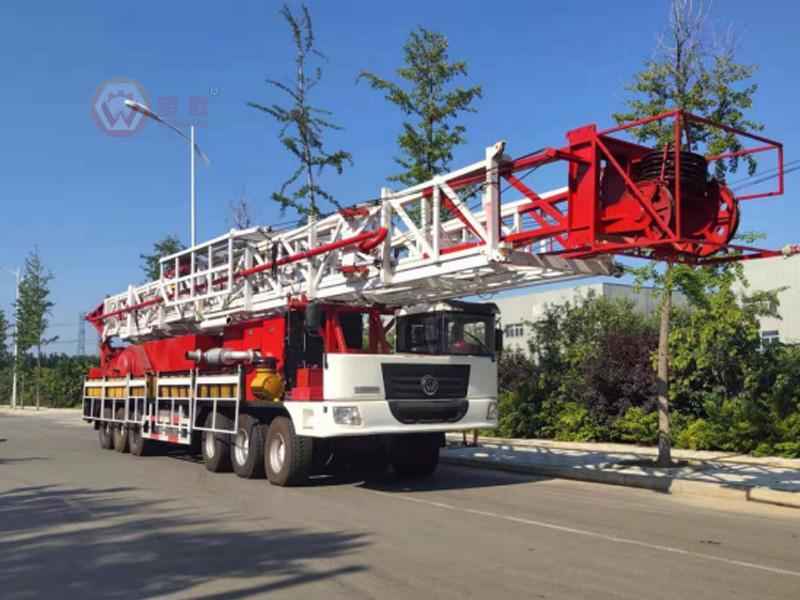
The reason 2. that the muck falls out> the main roll will be lifted after reversal. When the drilling bucket is lifted up in mud or water, due to the certain resistance of mud or water, this resistance will produce a downward force on the muck in the drilling bucket. Because the drill pipe of the drilling bucket is conical, the drilling footage is too fast, which leads to the muck inside the drilling bucket is not compact enough and the main roll is lifted too fast, cause the muck in the bucket to fall out! Therefore, not every time the bottom of the bucket is not closed, the muck can fall out...
The reason 3. the slipping phenomenon. At this time, the falling muck has lost the original integrity of the solid soil. Therefore, after the second tripping, the tooth tip is directly inserted into the muck, and the bottom plate of the drilling bucket is directly pressed on the muck. With the rotation of the drilling bucket, the falling muck is uneven and the gap is completely compacted. When the muck cannot be compressed, the plane of the bottom plate is held by the muck, the teeth then rotate repeatedly within the grooves already scribed. At this time, three layers are formed. The first layer is the drill bucket that rotates repeatedly, the second layer is the fallen muck: interlayer, and the third layer is the uncut solid soil. As the drill bucket is consistent with the diameter of the hole, the drill pipe rotates without resistance → no reaction force → no friction → no pressure, and the bottom plate and the fallen muck slip under the lubrication of water or mud.
The reason 4. to prevent skidding and slipping can be overcome, first of all, combined with the depth of the single bucket footage on the display. Although the mud layer drilling resistance is small, as the slag inside the drilling bucket increases, resistance will be generated to the slag inlet, so the drilling resistance is increased, and the sound of the planetary reducer on the power head changes with the resistance, so listening to the sound of the power head can judge the footage. When the drilling resistance increases, the rotation speed of the power head also decreases, so the footage can also be judged by the rotation speed of the drill pipe. If the geological change is not big, the drilling time and depth of each bucket should be kept within a certain range, and the depth of single bucket footage in mud layer should be within 0.5 to 0.6 meters. When the bottom of the bucket is reversed and closed, the bottom of the bucket should have a certain resistance when there is a load in the drilling, so as to prevent the bottom of the bucket and the drill barrel from reversing together.
Related News
Trailer Hanging Daily How to Maintain
2023-12-09
Characteristics of drilling rig
2022-08-25
Contact Us
E-mail:admin@wanglianjt.cn
North 200 Meters West of the Intersection of Xindong Road and Gaoyang Avenue, Hualong District, Puyang City, Henan Province


SAF Coolest v1.3.1.2 设置面板 NQISD-ZDTD-JAAEE-ZQS
无数据提示
Sorry, the current column is being updated, please look forward to it!
You can view other columns or returnHome Page